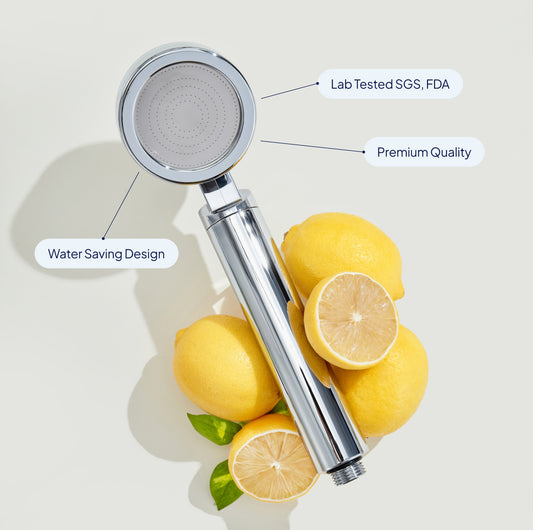
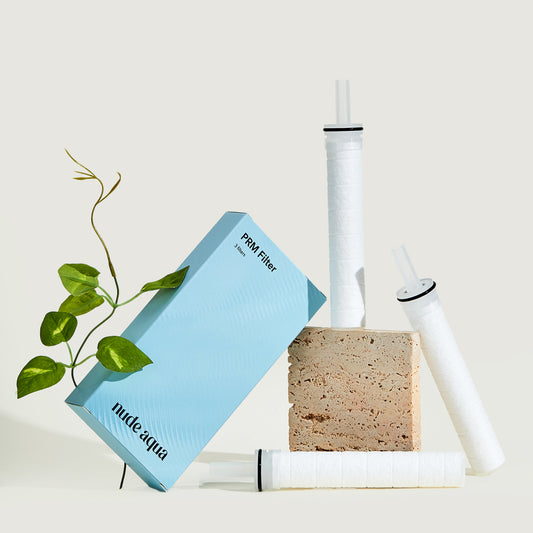
This is general information, not medical advice. If you have eczema, talk to your GP or dermatologist about your skin-care routine.
Quick answer: A shower filter won't treat eczema, but reducing chlorine or chloramine in your shower water may lessen dryness and irritation for some people. If you have eczema, choose an unscented filter that neutralises your area's disinfectant, shower in lukewarm water, and moisturise straight after. The best-studied water change, a household water softener, didn't improve children's eczema in a UK randomised trial.
Can a shower filter help eczema?
A shower filter can't cure or treat eczema, but it may help some people by removing chlorine or chloramine, which can dry and irritate the skin barrier.
-
What the evidence shows:
- There are no good clinical trials of shower filters for eczema.
- The closest is the SWET trial (PLoS Medicine, 2011). It gave 336 children with eczema in hard-water areas either a water softener or usual care. After 12 weeks, eczema improved in 20% with the softener and 22% with usual care, so the softener added no benefit.
-
Why people still try them:
- Free chlorine and chloramine are oxidisers, and hot water and steam increase skin and airway exposure.
- Removing them is simple and low-risk.
- Treat it as one small change alongside proper skin care, not instead of it.
What's the best shower filter for eczema?
The best shower filter for eczema is an unscented one whose media matches your water's disinfectant: vitamin C in chloramine areas such as Brisbane and parts of Sydney, or vitamin C, KDF or calcium sulfite where the water is chlorinated.
What to look for:
- No added fragrance. Fragrance is a common skin irritant. Many vitamin C cartridges, ours included, contain essential oils.
- The right media for your water. Check whether your supply uses chlorine or chloramine (see our city table).
- Evidence, not promises. Look for a named lab result or NSF/ANSI 177 (free chlorine). Be wary of any filter that claims to "cure" or "treat" eczema.
- Easy, regular replacement. A spent cartridge does nothing.
See how filters compare on media and testing in our shower filter comparison.
Is Nude Aqua suitable for eczema-prone skin?
Every Nude Aqua Vitamin C Shot is lightly scented with essential oils, so if fragrance triggers your eczema, Nude Aqua isn't the right filter for you. We'd rather tell you that than sell you one.
- If you're unsure, patch-test the filtered water on a small area first, and stop if your skin reacts.
- Nude Aqua suits people who want a vitamin C shower with a spa-style scent and aren't fragrance-sensitive.
What else helps eczema in the shower?
The shower habits that help eczema most are lukewarm water, short showers, a fragrance-free soap-free cleanser, and a thick fragrance-free moisturiser applied within a few minutes of drying off.
- Keep showers short (5–10 minutes) and lukewarm, not hot.
- Use a soap-free, fragrance-free wash, and only where you need it.
- Pat dry; don't rub.
- Moisturise within a few minutes, while the skin is still slightly damp.
- If your water is very hard, ask your GP whether a water softener is worth it. The SWET trial found no added benefit for children.
FAQ
Can a shower filter cure eczema?
No, a shower filter can't cure eczema. Eczema is a long-term skin condition, and no shower product treats it. Removing chlorine may reduce irritation for some people.
Is hard water bad for eczema?
Hard water has been linked to eczema in some studies, but in the SWET randomised trial, softening the water didn't improve children's eczema compared with usual care.
Are vitamin C shower filters good for sensitive skin?
Vitamin C shower filters neutralise chlorine and chloramine, which can help dryness, but many contain essential oils. If you have sensitive or eczema-prone skin, choose an unscented filter.
Does a shower filter remove chloramine?
Vitamin C shower filters neutralise chloramine; carbon and KDF filters reduce it only partly. Chloramine is used in Brisbane and the SEQ Water Grid and in parts of Sydney.